
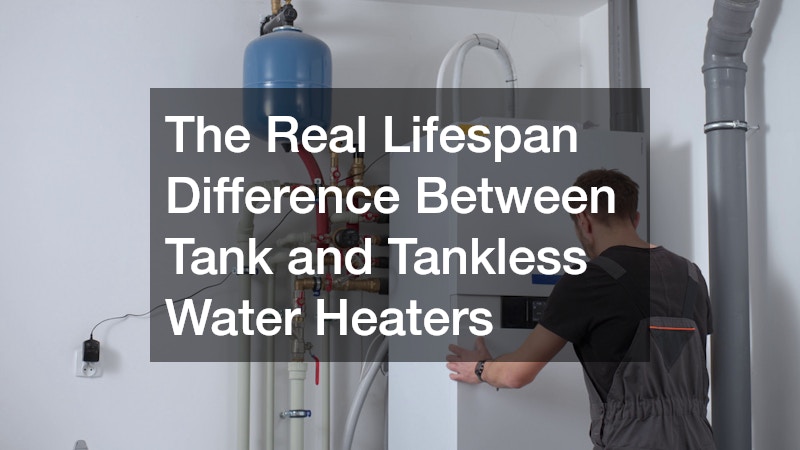
If you are shopping for a new water heater or wondering whether your current one is on its last legs, lifespan is probably your biggest question. Tank and tankless models age very differently, and knowing what to expect can save you from an unexpected cold shower or a costly emergency replacement. The right choice depends not just on upfront cost, but on how long each system realistically lasts in a typical home.
This article breaks down the real numbers, the factors that speed up or slow down wear, and what you can do to get the most years out of whichever system you own.
Average Service Life of Storage Tank Units
A conventional storage tank water heater typically lasts between 8 and 12 years, depending on water quality, usage habits, and how well it has been maintained. The tank itself is the weak point, since it holds 30 to 50 gallons of water at all times and is constantly exposed to internal corrosion. Once the glass lining or anode rod fails, rust can spread quickly, and a leak is usually the first visible sign of trouble. Homeowners in areas with hard water often see shorter lifespans because mineral buildup accelerates wear on internal components.
Because tank units fail gradually, many people do not realize their heater is declining until they notice lukewarm water, strange noises, or discoloration. Scheduling a professional water heater inspection every couple of years can catch early warning signs like sediment buildup or a weakening anode rod before they turn into a full tank failure. Catching these issues early is often the difference between a simple fix and a full replacement.
Expected Longevity of On-Demand Units
A tankless water heater generally lasts 15 to 20 years, roughly double the lifespan of a traditional tank system, because it only heats water as it flows through rather than storing it continuously. Without a large reservoir sitting full of water around the clock, there is less internal surface area exposed to constant corrosion. This design also means the unit is not cycling on and off to reheat standing water, which reduces overall wear on heating components.
That said, a tankless water heater is not maintenance-free, and its extended lifespan depends heavily on how well mineral scale is managed inside the heat exchanger. In hard water regions, scale can build up quickly and shorten the unit’s effective life if left unaddressed. Manufacturers typically recommend descaling the system annually to keep it running at or near its rated lifespan.
Water Quality and Mineral Buildup
Hard water is one of the single biggest factors separating a heater that reaches its full expected lifespan from one that fails early. High mineral content causes scale to coat heating elements, tank walls, and heat exchangers, forcing the system to work harder and generating extra stress on internal parts. Over time, this buildup insulates the metal from the water it is supposed to heat, which raises energy costs and accelerates component fatigue.
The good news is that mineral damage is largely preventable with the right precautions. A whole home water softener can dramatically slow scale formation in both tank and tankless systems, extending their usable years.
- Test your water hardness level if you are unsure whether a softener is needed
- Flush a tank heater annually to remove sediment sitting at the bottom
- Descale tankless units on the schedule recommended by the manufacturer
- Watch for reduced hot water pressure, which often signals internal buildup
Warning Signs That Point To Repair Or Replacement
Every water heater gives off signals before it fails completely, and recognizing them early can prevent property damage and higher repair bills. Rust colored water, popping or rumbling sounds, and inconsistent temperatures are all common red flags regardless of which system you own. Puddles or damp spots around the base of a tank unit almost always indicate an internal leak that will only get worse with time.
When these symptoms appear, calling in a professional for water heater repair sooner rather than later usually costs less than waiting until the unit fails outright. A technician can often determine whether the issue is a minor fix, like replacing a heating element or a faulty valve, or a sign that the entire system is nearing the end of its service life. Waiting too long on repairs frequently turns a small problem into a full replacement.
- Rumbling or popping noises from sediment hardening inside a tank
- Water that takes noticeably longer to heat up
- Visible corrosion on fittings or connections
- Error codes displayed on a tankless unit’s control panel
Maintenance Habits That Extend System Life
Regardless of which type of water heater you own, a few consistent habits make a measurable difference in how long it lasts. Annual flushing removes sediment that would otherwise harden and insulate heating components, forcing the system to work harder and burn out sooner. Tank owners should drain several gallons from the bottom valve until the water runs clear, while tankless owners typically need a descaling flush with white vinegar or a commercial solution to dissolve mineral buildup inside the narrow heat exchanger.
Checking the pressure relief valve is equally important, since this component prevents dangerous internal pressure from building up inside the tank. Lift the test lever briefly once or twice a year and confirm that water flows out and then stops cleanly; if it drips continuously afterward or doesn’t discharge at all, the valve likely needs replacing.
Setting the thermostat to a reasonable temperature, typically around 120 degrees, also reduces strain and lowers the risk of scalding. Higher settings accelerate mineral scaling and put extra stress on both tank linings and tankless heat exchangers, shortening their usable life. For homes with hard water, installing a water softener or inline filter can further cut down on sediment and scale, extending flush intervals and reducing wear on either system.
Routine professional attention matters just as much as homeowner upkeep. Having a trained technician look over the unit on a regular schedule allows early corrosion, loose connections, or failing parts to be caught before they turn into bigger problems. Most manufacturers recommend annual service for tank units and every 12 to 18 months for tankless systems, though households with hard water often benefit from more frequent visits.
During a typical inspection, a technician checks the anode rod for tank models, tests pressure relief valves, inspects electrical or gas connections, and flushes the system to clear out sediment or mineral scale. For tankless units, descaling is especially critical, since mineral buildup on the heat exchanger can reduce efficiency and trigger error codes long before the unit actually fails. Catching a weakened anode rod or a scaled-up exchanger during a routine visit can add years of usable life to either system.
These visits are relatively inexpensive compared to the cost of replacing an entire unit years ahead of schedule. A typical professional service call runs somewhere between $100 and $300, while a full water heater replacement can cost several thousand dollars depending on the unit type and installation complexity. Viewed that way, annual maintenance functions less like an optional expense and more like cheap insurance against premature failure.
Conclusion
Choosing between a tank and tankless water heater ultimately comes down to balancing upfront cost against long-term durability, and understanding realistic lifespans helps you make that decision with confidence. Whichever system you choose, consistent maintenance and prompt attention to warning signs will help you get every possible year out of it. If your current unit is showing its age or you are unsure how much life it has left, scheduling a professional evaluation is the smartest next step toward avoiding an unexpected breakdown.
