When swimming pool water has a pH that is too high, it can affect swimmer comfort, water clarity, and the effectiveness of sanitizing chemicals. Keeping the water within an appropriate range is an important part of routine pool maintenance. Fortunately, correcting elevated pH does not have to be complicated when you understand what causes the imbalance and how to address it safely.
Learning how to lower pH in swimming pool water starts with testing the water regularly and understanding how different pool chemicals affect its overall balance. With the right approach, pool owners can make adjustments gradually while avoiding unnecessary changes to other aspects of water chemistry.
Understand Why Pool pH Becomes High
Pool pH measures how acidic or alkaline the water is. On the pH scale, lower numbers indicate greater acidity, while higher numbers indicate greater alkalinity. Swimming pools generally need their pH maintained within a range that supports swimmer comfort and proper sanitizer performance.
Several factors can cause pH to rise. One common contributor is the use of certain sanitizing products, which may gradually increase pH depending on their chemical composition. Aeration can also cause pH to increase. Water features such as fountains, waterfalls, and spa jets introduce air into the water and can contribute to changes in its chemistry.
Other factors may include adding fill water with naturally high pH or having high total alkalinity. Understanding the underlying cause can help pool owners determine whether a one-time adjustment is enough or whether additional maintenance is needed.
Test the Water Before Making Adjustments
Testing should always come before adding chemicals. A test kit or test strips can provide information about pH and other important measurements, including total alkalinity and sanitizer levels.
Testing gives you a starting point and helps prevent unnecessary chemical additions. If the pH is only slightly elevated, a small adjustment may be sufficient. If it is significantly high, more careful correction may be required.
It is also helpful to follow the instructions provided with your testing equipment. Different testing methods can have different procedures and levels of precision. Taking a sample from an appropriate area of the pool and using clean testing equipment can also help produce more reliable results.
Choose the Appropriate pH-Lowering Chemical
Pool owners typically use an acid-based chemical to reduce high pH. Common options include muriatic acid and sodium bisulfate, often called dry acid. The appropriate choice depends on the pool, existing water chemistry, product instructions, and the preferences of the person maintaining it.
Always read the product label before use. Labels provide important information about dosage, handling, application, and safety precautions. Never assume that two products should be used in exactly the same way.
The amount required will depend on factors such as pool volume and the current pH level. Using more chemical than necessary can cause the pH to drop too far, potentially creating another imbalance. Measuring carefully is therefore an important part of the process.
Allow the Water to Circulate
After adding a pH-reducing product, the pool water needs time to circulate so the chemical can distribute throughout the pool. Run the circulation system according to the product’s directions.
Avoid immediately adding additional chemicals simply because the pH has not changed yet. Water chemistry may take time to stabilize, and adding too much acid can cause the pH to fall below the desired range.
Once the recommended waiting period has passed, test the water again. This gives you a clearer picture of whether the adjustment was successful.
Know When to Seek Professional Assistance
Most routine pH adjustments can be handled by pool owners who carefully follow product directions. However, persistent chemistry problems may indicate a more complicated issue.
If repeated adjustments fail to keep pH within the appropriate range, consider having the water professionally tested. A pool professional can evaluate pH, alkalinity, sanitizer levels, calcium hardness, and other factors that may be affecting water balance.
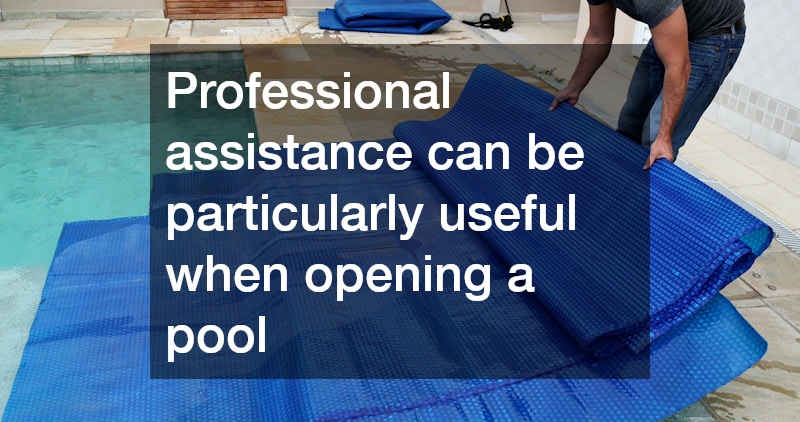
Professional assistance can be particularly useful when opening a pool, dealing with major water chemistry problems, or troubleshooting recurring issues.
Maintaining balanced pool water requires regular testing, careful chemical use, and attention to the factors that influence water chemistry. When pH rises above the desired range, measured adjustments can help restore balance without creating additional problems.
The safest way to lower pH in swimming pool water is to test first, select an appropriate product, follow its instructions, allow the water to circulate, and test again before making further changes. Monitoring total alkalinity and identifying recurring causes of high pH can also make ongoing maintenance more manageable.
By taking a gradual and consistent approach, pool owners can keep their water chemistry under control and create a more comfortable swimming environment throughout the season. Knowing how to lower pH in swimming pool water is one useful part of an overall pool maintenance routine that includes sanitation, circulation, filtration, and regular water testing.