
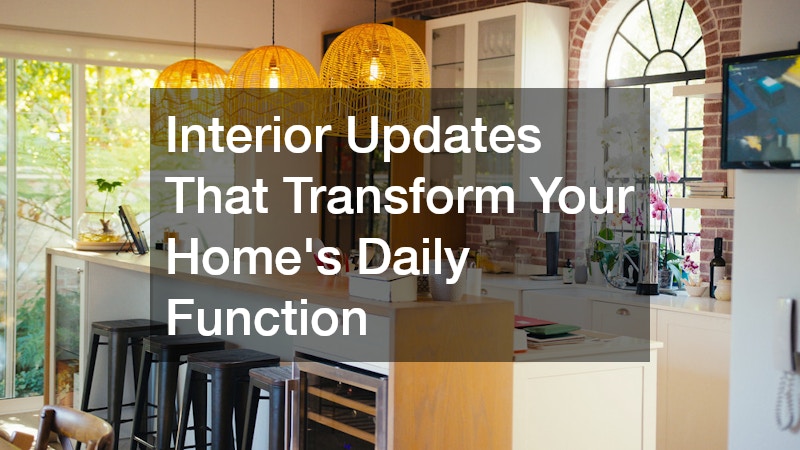
The way your home functions every day matters more than how it looks in photos. Small inefficiencies, like a temperamental thermostat or a cluttered garage, add up to daily frustration that chips away at your quality of life. The good news is that targeted interior updates, paired with a few smart exterior investments, can fix these pain points for good. This article walks through the most impactful upgrades homeowners can make to improve comfort, efficiency, and everyday livability.
Upgrading Climate Control Room by Room
 Whole-house comfort doesn’t always require a full HVAC overhaul. For additions, converted garages, or rooms that never seem to hold the right temperature, a split air conditioning system offers targeted relief without the cost of extending ductwork. These units mount directly on a wall and connect to an outdoor compressor via a small conduit, making them a practical retrofit for older homes with limited duct access. Sizing matters more than homeowners expect. A room under 300 square feet typically needs a 9,000 to 12,000 BTU unit, while larger bonus rooms or converted garages may require 18,000 BTU or more — an oversized unit cycles too often and wastes energy, while an undersized one runs constantly without ever catching up. Multi-zone systems add further flexibility, letting a single outdoor compressor power two to four indoor units in different rooms, each with its own thermostat control. This is especially useful in homes with inconsistent temperatures between floors, since bedrooms upstairs and living spaces below often have very different cooling needs. Installation costs generally run lower than adding central air, though placement still matters: the indoor unit needs a clear wall near an exterior surface, and the outdoor compressor requires adequate airflow and clearance from fences or landscaping. Many models also include heat pump functionality, providing efficient warmth in winter and eliminating the need for a separate heating solution in that room.
Beyond installation cost, homeowners appreciate how quiet and energy-efficient these systems tend to be compared to older window units. Ductless mini-splits, for example, typically operate in the 19-to-30-decibel range indoors — closer to a whisper than the rattle of a traditional AC unit — and their inverter-driven compressors adjust output rather than cycling on and off, which cuts energy use significantly over time. Many models also include heating functionality, giving you year-round temperature control from a single appliance, often with efficiency ratings (SEER2 and HSPF2) high enough to qualify for utility rebates or federal tax credits. These systems also shine in spaces that central air struggles to reach evenly. A converted garage, a bump-out addition, or a room with vaulted ceilings can end up too hot or too cold even when the rest of the house is comfortable, and a dedicated zone fixes that without rerouting your entire ductwork. If you’re weighing options for a sunroom, home office, or finished basement, it’s worth discussing a few specifics with a contractor: how many zones you’ll need, whether a single outdoor condenser can support multiple indoor units, and where the line set and condensing unit can be placed without becoming an eyesore or maintenance headache. Don’t assume central air is your only path forward — for single rooms or additions, a mini-split or small ducted system is often cheaper to install and run.
- Ideal for rooms added after the original HVAC install, such as sunrooms, converted garages, or attic bonus rooms the main system was never sized to handle
- Requires minimal wall penetration compared to ducted systems, typically just a 3-inch sleeve for refrigerant lines, drainage, and power
- Offers zoned control so unused rooms aren’t cooled unnecessarily, with each indoor head running independently and adjustable in 1-degree increments
- Supports multiple indoor units on a single outdoor condenser, making it practical for cooling two or three rooms without adding equipment outside
- Generally quieter than portable or window air conditioning units, often operating around 19-25 decibels versus 50+ for window units
- Delivers strong energy efficiency, since inverter-driven compressors adjust output to demand rather than cycling fully on and off
Replacing an Aging Central Air Unit
If your central system is over twelve years old, you’ve likely noticed rising utility bills, uneven cooling, or more frequent repair calls. These are classic signs that air conditioning replacement is more cost-effective long term than continuing to patch an aging unit. Newer systems use significantly less energy to produce the same cooling output, which can offset the upfront investment within a few years.
Timing matters too. Scheduling replacement in the spring or fall, rather than during a summer heat wave, often means better contractor availability and pricing. It’s also a good opportunity to have your ductwork inspected, since leaky or undersized ducts can undermine even the most efficient new unit.
- Units older than 12-15 years often cost more to repair than replace
- Look for a SEER2 rating that matches your climate needs
- Ask about rebates for high-efficiency models
- Pair replacement with a duct inspection for best results
Refreshing the Kitchen for Everyday Cooking

The kitchen is the room most homeowners use hardest, day in and day out, which means small inefficiencies here are felt constantly. Working with a kitchen remodel contractor to reconfigure a poor layout, add storage, or update worn countertops can dramatically change how the space functions for meal prep and cleanup. Even modest changes, like relocating a trash pull-out or widening a walkway, can make a kitchen feel far more workable.
Before committing to a full renovation, think honestly about your daily habits. Do you need more counter space for baking, better lighting over the stove, or a pantry that actually fits your groceries? A good contractor will ask these questions upfront rather than pushing a generic layout, so come prepared with a list of your biggest daily frustrations in the space.
- Identify your top three daily kitchen frustrations before designing
- Prioritize function over trend-driven finishes
- Consider workflow between the sink, stove, and refrigerator
- Ask about phased renovations if budget is a concern
Controlling Natural Light With Window Treatments

Light control affects everything from energy bills to sleep quality to how glare interacts with your television or computer screen. Installing interior shutters gives homeowners precise control over natural light while adding a layer of insulation that soft curtains simply can’t match. Unlike blinds, shutters are mounted directly to the window frame, which makes them more durable and easier to keep clean.
Shutters also offer a practical privacy solution for street-facing rooms without sacrificing daylight entirely, since most louver styles can be angled rather than fully closed. They tend to hold up better in humid rooms like bathrooms compared to wood blinds, which can warp over time. For homeowners updating multiple rooms at once, working with a specialist ensures consistent sizing and finish throughout the house.
- Provide better insulation than most curtains or blinds
- Easier to clean than fabric-based window treatments
- Adjustable louvers allow partial privacy with light
- Well suited for humid rooms like kitchens and bathrooms
Extending Living Space With a Functional Deck
Outdoor living space directly expands your home’s usable square footage, especially during warmer months when families want to eat, relax, or entertain outside. Hiring an experienced deck builder ensures the structure is designed not just for appearance but for how you’ll actually use it, whether that’s hosting large gatherings or creating a quiet reading nook. Material choice matters here too, since composite decking requires far less maintenance than traditional wood over a ten-year span.
A well-planned deck also considers sun exposure, sightlines to the yard, and proximity to the kitchen for easy outdoor dining. Homeowners often underestimate how much railing style, stair placement, and lighting affect daily usability once the deck is built. Getting these details right from the start avoids costly reconfigurations later.
- Composite decking reduces long-term maintenance compared to wood
- Consider sun exposure when planning deck orientation
- Built-in lighting extends usable hours into the evening
- Proximity to the kitchen simplifies outdoor entertaining
Protecting the Home With a Reliable Roof
Nothing undermines a home’s daily comfort faster than a roof that leaks, especially during storm season when repairs can’t wait. Professional roofing installation done with quality materials protects everything underneath, from insulation to drywall to the electrical systems running through your attic. A properly installed roof also plays a major role in regulating indoor temperature, which directly affects how hard your HVAC system has to work.
Homeowners should pay attention to ventilation and underlayment quality just as much as shingle style, since these hidden components determine how long the roof actually lasts. A rushed or poorly ventilated installation can lead to moisture buildup, mold, and premature wear, even if the shingles themselves look fine from the curb. Getting multiple quotes and asking about warranty terms helps ensure you’re paying for quality, not just speed.
- Proper attic ventilation prevents moisture buildup and mold
- Underlayment quality affects long-term durability
- A well-installed roof reduces strain on HVAC systems
- Compare warranty terms across multiple contractor quotes
Maintaining Your Septic System for Peace of Mind
For homes not connected to municipal sewer lines, septic system health directly impacts daily household function in ways that are easy to overlook until something goes wrong. Regular septic pumping prevents backups, slow drains, and unpleasant odors that can disrupt an entire household with little warning. Most systems need attention every three to five years, though household size and water usage can shift that timeline.
Ignoring routine maintenance often leads to far more expensive repairs, including full drain field replacement, which can cost significantly more than years of preventive pumping combined. Keeping a maintenance log and knowing your tank’s location makes future service calls faster and less disruptive. It’s a small, recurring task that protects one of the most important systems in your home.
- Most septic tanks need pumping every 3-5 years
- Watch for slow drains or sewage odors as warning signs
- Avoid flushing grease, wipes, or harsh chemicals
- Keep records of past service for future reference
Stabilizing Sloped Yards With Structural Support
Homes on sloped lots often deal with erosion, drainage problems, and unstable soil that affects both landscaping and foundation stability over time. Well-built retaining walls redirect water flow and hold soil in place, preventing the kind of gradual erosion that can undermine patios, walkways, and even the home’s foundation. They also create usable flat space in yards that would otherwise be difficult to landscape or enjoy.
Material choice affects both function and appearance, with options ranging from natural stone to engineered concrete block systems designed for specific load requirements. Proper drainage behind the wall is just as important as the wall itself, since trapped water is the leading cause of retaining wall failure. Consulting with someone experienced in local soil conditions helps ensure the structure holds up for decades rather than years.
- Prevents soil erosion on sloped or uneven lots
- Creates usable flat space for landscaping or seating
- Requires proper drainage to avoid structural failure
- Material choice affects both cost and longevity
Clearing Clutter Before Any Renovation Begins
Before any interior update can truly transform daily function, the accumulated clutter of old furniture, construction debris, and unused belongings often needs to go first. Professional junk removal services make this process far faster than multiple trips to a landfill or donation center, especially during a larger renovation when debris piles up quickly. This is particularly useful when clearing out a garage, basement, or attic that’s been a catch-all for years.
Clearing space also helps homeowners see their rooms more objectively, which makes planning new layouts or storage solutions easier. Once the clutter is gone, many people realize they need less new furniture than they originally thought, or that certain pieces simply don’t fit the room’s real function. This clarity is valuable whether you’re renovating one room or updating the entire home.
- Speeds up renovation timelines by clearing space quickly
- Reduces multiple trips to donation centers or landfills
- Helps homeowners reassess what they actually need to keep
- Useful for garages, basements, and attics especially
Furnishing Rooms to Match Real Daily Habits

Once clutter is cleared and structural updates are complete, furniture choices determine whether a room actually functions the way it’s meant to. Visiting a furniture store with measurements and a clear sense of daily routines, rather than shopping on impulse, leads to pieces that fit both the space and how the family actually lives. A sectional that looks great in a showroom might overwhelm a small living room or block natural walking paths.
Storage-oriented furniture, like ottomans with hidden compartments or console tables with drawers, can make small rooms feel far more functional without adding visual clutter. It’s worth prioritizing pieces that serve double duty, especially in multi-use spaces like a home office that doubles as a guest room. Taking time with this final step ensures all the previous updates actually translate into a home that works better every day.
- Measure doorways and hallways before buying large pieces
- Prioritize storage-friendly furniture in multi-use rooms
- Consider durability for households with kids or pets
- Avoid impulse purchases that don’t match room dimensions
Transforming your home’s daily function doesn’t require tackling every project at once. Start with the area causing the most frustration, whether that’s an uncomfortable room, a cluttered space, or an aging system that needs replacing, and build outward from there. Prioritizing updates based on real daily habits, rather than trends, ensures every dollar spent actually improves how you live. With a clear plan and the right professionals involved at each step, these changes add up to a home that genuinely works better for you and your family.
