
Key Takeaways
- Safety hazards and structural threats always come before cosmetic upgrades, regardless of how tempting a kitchen remodel might feel.
- A simple scoring system that weighs urgency, cost, and resale value helps cut through decision paralysis.
- Exterior projects like garage door replacements often deliver stronger returns than interior renovations.
- Preventive maintenance costs a fraction of what emergency repairs do, so scheduling matters as much as budgeting.
- Matching your plans to how long you intend to stay in the house keeps you from overspending on features you won’t recover.
- Grouping related projects together saves money on labor, permits, and material delivery.
- Financing choices should match the lifespan of the upgrade so you’re not paying off a water heater years after it dies.
The Overwhelm of a Long Fix-It List
Every homeowner knows the feeling. You walk through the front door, notice the chipped paint, remember the furnace made a weird sound last week, and suddenly recall the gutters need cleaning before the next storm. The list grows faster than the weekend hours you have to tackle it.
Without a clear system, most people default to whatever bothers them most in the moment or whatever a contractor’s flashy ad convinces them to tackle first. That approach drains savings and often leaves the truly urgent issues ignored until they become emergencies.
The good news is that smart sequencing isn’t complicated. It just requires honest answers about safety, cost, timing, and long-term value. Once you learn to filter projects through those lenses, the chaotic to-do list becomes a workable roadmap.
Why Do So Many Owners Pick the Wrong Project First?
The most common mistake is leading with aesthetics. Fresh kitchen cabinets feel exciting, while a hidden plumbing leak feels boring until it floods the basement. Social media doesn’t help, since it rewards photogenic renovations rather than practical ones.
Budget confusion is another trap. People often underestimate repair bills and overestimate what cosmetic upgrades add to resale. According to EngiMarket, the average owner-occupied household spent about $9,495 on improvements across 2021 through 2023, which includes homeowners who did nothing at all. Spread that over a full property, and you quickly see why choosing wisely matters.
Finally, decision fatigue sets in. When ten projects compete for attention, many owners freeze and do none. Breaking the paralysis starts with ranking, not researching.
Sorting Projects by Urgency Versus Want
Urgency is not the same as desire. A leaking roof is urgent. A new backsplash is a want. Both can land on your list, but they don’t deserve the same timeline or budget line. One of the biggest mistakes homeowners make when figuring out how to prioritize home improvement projects is treating every item on their wish list with equal weight, which almost always leads to overspending on cosmetics while structural issues quietly get worse behind the walls.
The emotional pull of a want is strong. Open any home improvement magazine or scroll through a design feed and it’s easy to convince yourself that a kitchen island or a soaking tub belongs at the top of the list. But urgency is defined by consequence, not excitement. If ignoring a project for twelve months would cause measurable damage, inflate repair costs, or put someone at risk, it is urgent. If ignoring it only means another year of looking at dated tile, it is a want.
The Three-Tier Urgency Test
Try grouping every project into one of three buckets:
- Critical: active damage, safety risks, code violations, or systems about to fail
- Important: preventive work that stops future damage within one to two years
- Optional: style, comfort, and personalization upgrades with no deadline
Critical items get funded first, period. Think water intrusion, a failing furnace in a cold climate, exposed wiring, a cracked gas line, or a deck with rotting support posts. These are not negotiable, and delaying them almost always multiplies the cost — a two-hundred-dollar flashing repair ignored for a year can turn into an eight-thousand-dollar subfloor and drywall rebuild.
Important ones get scheduled next, often during the same season to batch labor. This is the category where smart owners save the most money long term. Resealing a driveway, servicing an HVAC system, replacing a water heater showing rust at the base, or regrading soil pulling away from the foundation all belong here. None of these will ruin your week if postponed by a month, but each has a clear expiration date before it slides into the critical column.
Optional projects wait their turn, which is honest rather than defeatist. Painting the dining room, swapping out cabinet hardware, upgrading to a smart thermostat for aesthetics rather than efficiency, or finally installing that pergola — these matter for how you enjoy your home, and they deserve a spot on the plan, just not at the expense of the roof over your head.
This filter alone will reshape most owners’ plans. Suddenly the master bath redo moves down the list while the aging electrical panel moves up where it belongs. It also makes conversations with a spouse or partner far easier, because you are no longer arguing about taste — you are sorting by consequence. Once each project has a tier attached to it, the sequence of your next two or three years of home improvement spending tends to write itself.
How to Weigh Return on Investment Against Repair Costs

Not every dollar spent comes back at resale, and that’s fine, but you should know the odds before swiping the card. Projects that improve curb appeal, energy efficiency, or essential functionality tend to recover more value than luxury interior upgrades.
Exterior work consistently outperforms. According to Pro House Maintenance, a garage door replacement averaging $4,672 added $12,507 in resale value in the 2025 Cost vs. Value Report, delivering a 267.7% return and topping every tracked project. That kind of math reshapes priorities fast when selling is on the horizon.
Building a Simple ROI Score
Figuring out how to prioritize home improvement projects gets easier when you assign numbers instead of relying on gut feel. For each project on your list, score it from one to five on three factors:
- Urgency (5 = will fail soon, 1 = purely optional)
- Resale impact (5 = strong return, 1 = negligible return)
- Daily enjoyment (5 = you’ll notice it every day, 1 = you’ll forget it exists)
Add the three numbers. Anything scoring twelve or higher moves to the top of the queue. Anything under seven can wait a year or longer without regret. This cuts emotion out of the ranking without ignoring quality of life.
When Maintenance Beats Renovation
Prevention is almost always cheaper than reaction. A $400 service call to tune up a furnace is nothing compared to a $6,000 replacement in January. Yet maintenance is the easiest category to skip because nothing visible changes afterward.
Industry data suggests this mindset is finally shifting. According to the Home Improvement Research Institute, roughly half of homeowners are planning a maintenance project in the first quarter of 2026, with another 30% planning repairs. That tells you where seasoned owners are putting their money, and new owners should take the hint.
Pay close attention to the big-ticket systems in your house. Water heaters, HVAC units, roofs, and electrical panels all have predictable lifespans, and ignoring them leads to costly system failures that no cosmetic upgrade can offset. Knowing the age of each system lets you plan replacement before failure rather than after.
A reasonable maintenance calendar might include:
- Quarterly: HVAC filter changes, smoke detector tests, drain checks
- Semi-annually: gutter cleaning, caulk inspection, dryer vent clearing
- Annually: furnace tune-up, water heater flush, roof visual inspection
- Every 3-5 years: exterior paint touch-ups, deck resealing, driveway sealing
Matching Projects to How Long You’ll Stay
Your timeline in the house should drive almost every decision. Owners planning to sell within two years should chase visible return. Owners staying ten-plus years can invest in comfort and personalization that may never pay back dollar for dollar, but will enrich daily life.
If a move is coming soon, focus on neutral paint, flooring refresh, and anything that photographs well online. Small outdoor upgrades that boost curb appeal often outperform expensive interior remodels because they shape the buyer’s first impression before they ever step inside.
Longer timelines open different doors. Energy efficiency upgrades like insulation, heat pumps, and solar panels take years to pay back but deliver real savings for owners who stay put. Mortgage conditions are nudging more people toward staying. According to Angi, about 32% of homeowners plan maintenance projects in 2026 as higher mortgage rates make upgrading current homes more attractive than relocating.
Ask yourself a blunt question before every major project: will I still be here to enjoy or recoup this five years from now? If the answer is no, scale the budget accordingly or skip the project entirely.
Bundling Projects to Stretch Your Budget
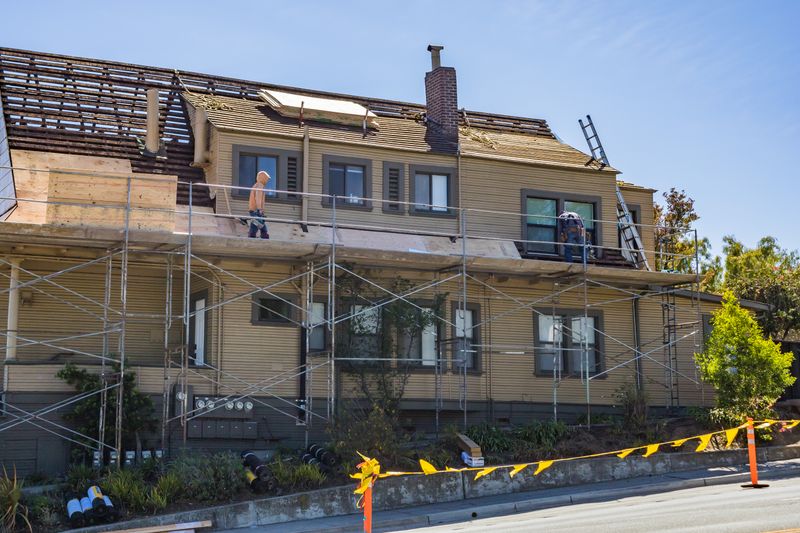
Smart sequencing isn’t just about which project comes first. It’s also about which projects belong together. Contractors charge setup fees, permit runs eat time, and material deliveries carry minimums. Tackling related work in a single push often shaves 15 to 25 percent off total cost compared to spreading the same jobs across three separate years.
Natural Project Pairings
Some combinations practically beg to be scheduled together:
- Roof replacement and gutter upgrades, since the crew is already up there
- Bathroom tile and plumbing fixture swaps, because the walls are open anyway
- Siding work and window replacement, which share scaffolding and flashing details
- Flooring and interior paint, since empty rooms are rare and valuable
The same logic applies to rooms adjacent to each other. If you’re redoing the kitchen, the dining room floors should probably get refinished at the same time so transitions line up and dust only settles once.
Timing Around Seasons and Trades
Scheduling matters too. Exterior work booked in late fall or early spring often costs less because contractors are hungrier for jobs. Interior projects go smoother in summer when windows can stay open for ventilation. Avoid peak holiday weeks when subcontractors vanish and material lead times balloon.
Picking the Right Way to Pay
How you finance a project should mirror how long the upgrade will last. Putting a twelve-year roof on a credit card you’ll pay off in six months is fine. Putting the same roof on a thirty-year refinance means you’re still paying for it long after it needs replacing again.
Cash works best for anything under a few thousand dollars or for maintenance that recurs. Home equity lines make sense for mid-sized projects in the $10,000 to $40,000 range where the upgrade clearly adds value. Longer-term refinancing should be reserved for additions, major system overhauls, or energy upgrades that pay back through monthly savings.
A few guardrails worth setting before you borrow:
- Never finance a cosmetic upgrade longer than you plan to keep the house
- Keep total renovation debt under 10 percent of the property’s current value
- Build a 15 percent contingency into every bid, because surprises are guaranteed
- Get three written estimates on any job over $5,000
Discipline on the funding side protects every other decision you’ve made about priorities. The best-ranked project list falls apart quickly if the money runs out halfway through year two.
Revisiting the List Every Year
Priorities shift. A system that was healthy last January might be limping by December. Market conditions change what buyers want. Your own plans about staying or selling evolve. Rebuilding the scored list once a year, ideally in January or right after tax season, keeps the roadmap honest.
Keep notes on what you spent, what it actually cost compared to the estimate, and how satisfied you are months later. That record becomes gold the next time a contractor hands you a bid or a neighbor asks what something ran. It also helps you spot patterns, like consistently underestimating labor or overvaluing trendy finishes that lost their appeal within a year.
Conclusion
Managing a property is a long game, and the owners who come out ahead are the ones who treat it like portfolio management rather than impulse shopping. Scoring projects, respecting urgency, and matching spending to timeline turns an overwhelming list into a sequence that actually gets completed. The flashy renovation can wait a season if the furnace is on borrowed time.
None of this requires special expertise. It just requires writing things down, being honest about what’s urgent versus what’s exciting, and resisting the pull of whatever the algorithm served up this morning. A spreadsheet, a walkthrough, and an afternoon of scoring will save you more money than any single contractor negotiation.
Start with the critical bucket this month. Schedule the important work for the next two quarters. Let the optional projects live on a wish list where they can wait their turn without crowding out the decisions that actually protect your biggest asset. The house will be standing stronger, costing less to run, and worth more when you eventually decide to sell or hand it down.
